Loading...
Serving Miami, FL and surrounding areas. (786) 435-9567
Uneven floors, cracking tile, and worn pool decks all point to the same problem: the concrete underneath needs attention. Self-leveling concrete and overlays fix the root cause without tearing everything out.
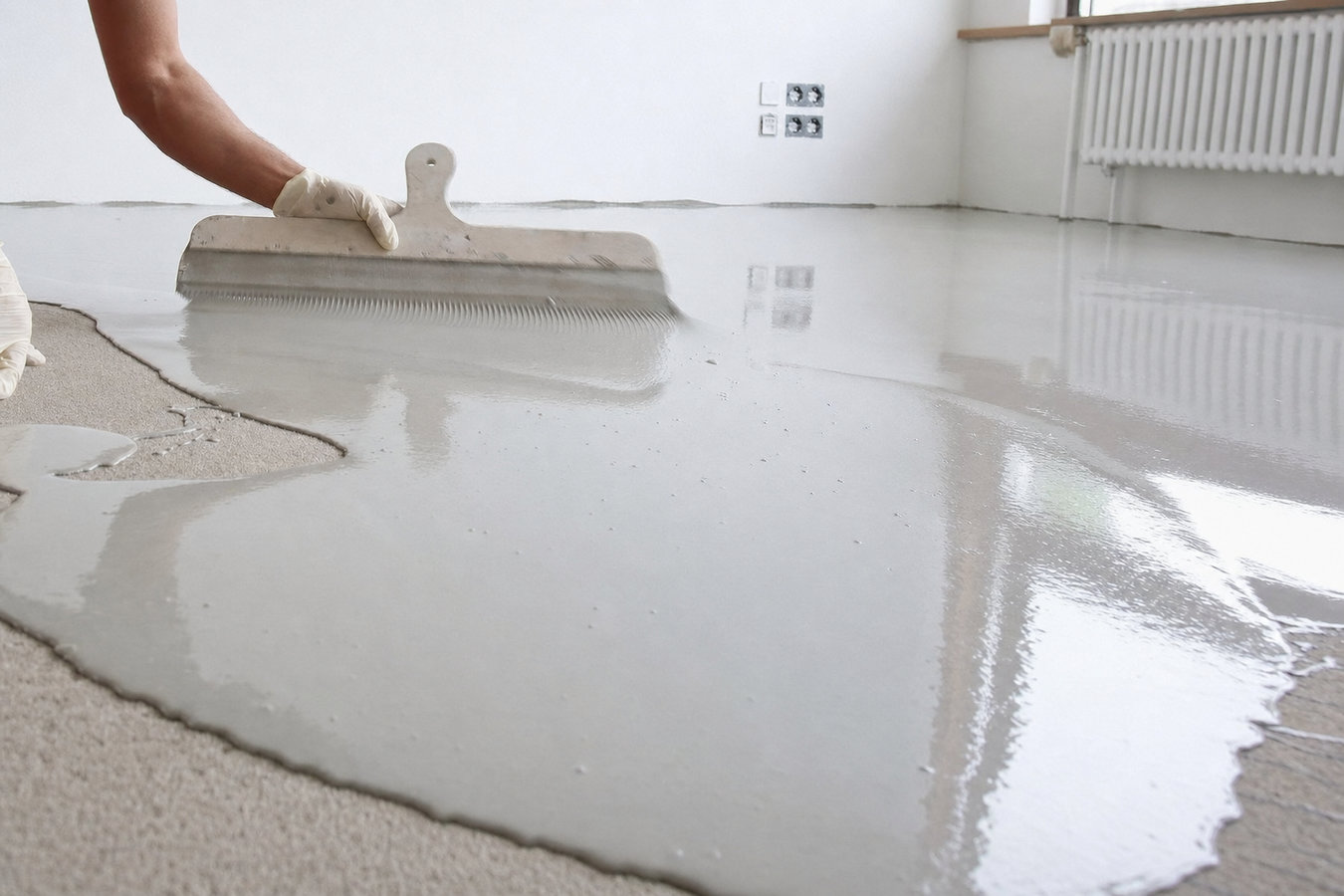
Self-leveling concrete in Miami is a specially mixed material that flows into low spots and fills them without manual screeding, producing a smooth and level surface that is ready for tile, flooring, or a decorative overlay. Most straightforward interior jobs take one to three days from pour to a walkable floor, with full hardness reached over the following weeks.
The biggest threat to any overlay or pour in South Florida is moisture pushing up through the slab from the high water table below. A good contractor tests for this before touching the floor and applies a moisture barrier when needed. This step is not optional in Miami, and skipping it is the most common reason floors fail within the first year. If you have an existing surface that simply needs protection after leveling, concrete resurfacing and overlays covers the full range of overlay finish options for driveways, patios, and pool decks.
Miami homeowners on slab foundations - which is the vast majority of residential construction in Miami-Dade County - often find overlays are the most cost-effective way to refresh a floor without demolition, especially before a new flooring installation.
If you have replaced tile in the same spot more than once and it keeps cracking or popping up, the problem is almost certainly the floor underneath. In Miami, this often means the slab has shifted slightly or has low spots creating stress points. A self-leveling pour corrects the unevenness so the next floor installation actually holds.
If a marble rolls consistently toward one side, or if you notice a slope near a doorway or in the middle of a room, the slab is uneven. This is common in older Miami homes where the ground has settled over time. Self-leveling concrete fills low areas and creates a flat surface without major demolition.
White, powdery deposits on a concrete floor - especially in a garage or utility room - are a sign that moisture is moving up through the slab. This is extremely common in Miami-Dade County because of the shallow water table. Left untreated, that moisture will destroy any flooring placed on top of it.
Miami's intense sun and frequent rain cycles cause outdoor concrete surfaces to degrade faster than in cooler climates. If your pool deck has surface cracks, has lost its color, or feels rough on bare feet, an overlay can restore it without tearing anything out. This is one of the most common calls we receive from Miami homeowners.
We provide self-leveling concrete pours for interior floors that need to be flat before tile, hardwood, or other flooring goes down - and for spaces where the concrete itself will be the finished surface. Every job starts with a thorough assessment of the existing slab, including moisture testing, because skipping that step in Miami's climate is how floors fail early. If the pour is a preparation step before a decorative top coat, we work seamlessly into the finish phase as well.
For outdoor surfaces - pool decks, patios, and covered lanais - we apply overlays specifically designed for South Florida's UV exposure, heat, and frequent rain. These finishes are engineered to stay bonded, color-stable, and slip-resistant through Miami's conditions, not just through the first season. We also handle pool deck coatings and resurfacing as a focused service, and our concrete resurfacing and overlay service covers the full range of driveway and patio options.
Best for interior rooms with uneven slabs where tile, hardwood, or LVP will be installed on top.
Essential for Miami homes with high water table exposure - applied before any overlay or pour to prevent peeling and delamination.
For homeowners who want color, texture, or a polished look on an interior or sheltered exterior surface that is already structurally sound.
UV-stable, slip-resistant finishes rated for Miami's heat, rain, and direct sun exposure - applied on pool decks, covered lanais, and open patios.
Miami sits at or near sea level, and the water table across much of Miami-Dade County is extremely shallow. That means moisture is almost always pushing up through concrete slabs from below - a condition that makes moisture testing and barrier installation non-negotiable before any overlay goes down. An overlay applied over an untreated wet slab in Miami can start bubbling or peeling within months, regardless of how well the surface itself is prepared. The South Florida Water Management District documents the Biscayne Aquifer - the shallow groundwater system that affects nearly all of Miami-Dade County's slab foundations.
Miami's outdoor living culture also drives strong demand for pool deck and patio overlays. Homeowners in Hialeah and North Miami regularly contact us when their outdoor slabs have cracked or degraded faster than expected. Miami's UV intensity, heat, and frequent rain cycles are harder on outdoor concrete than most U.S. climates - which is why the finish and products used for a Miami pool deck or patio overlay need to be chosen specifically for these conditions, not just specified generically. Our crews schedule pours for early morning on warm days to manage the faster set times that Miami's heat causes, keeping the finished floor consistent and crack-free.
When you reach out, we ask a few basic questions - what room or surface you are dealing with, what the floor looks like, and what you want it to become. We respond within one business day and schedule a free on-site visit because the condition of your existing floor drives the entire approach and price.
We inspect the floor for cracks, soft spots, and unevenness - and we test for moisture coming up through the slab. In Miami, this test is standard practice, not an add-on. You receive a written estimate that explains what prep is needed, what the finished surface looks like, and how long the job takes.
On the day of work, the crew cleans the floor, repairs cracks, and roughs up the surface so the new material bonds properly. If a moisture barrier is needed, it goes down first. The self-leveling material or overlay is then applied - early in the morning on warm days to manage Miami's set-time acceleration.
Light foot traffic is typically safe within 24 hours. Heavy furniture and appliances can return after the floor reaches full hardness, which takes about a month - though the floor is usable well before then. We walk you through what to avoid during the curing period and check in after the job.
Free on-site estimate. We test for moisture before every pour. Reply within one business day.
(786) 435-9567We test every Miami slab for moisture before any material goes down. This is not a standard practice everywhere, but it should be - especially here, where the shallow water table makes moisture intrusion nearly universal. Skipping the test is how floors fail within a year, and we are not willing to risk your investment or our reputation.
We use self-leveling materials and overlay systems rated for Miami's heat, humidity, and UV exposure. The products that work well in a northern climate can behave differently in South Florida's heat - setting too fast, cracking, or degrading early. Our material choices are guided by local experience, not generic spec sheets.
Miami's summer temperatures can push concrete to set faster than intended, causing cracking or inconsistency in the finished surface. We schedule our pours for early morning on warm days and use products suited to the climate. That planning discipline is the difference between a floor that cures correctly and one that has to be redone.
No phone quote will tell you what your floor actually needs - every Miami slab is different. We visit your floor, assess it honestly, and give you a written estimate you can compare against others. The American Society of Concrete Contractors establishes the professional standards our work follows. What you agree to at the start is what you pay at the end.
We have been working on Miami slabs since 2016, and the single most consistent thing we hear from homeowners who have had a bad experience elsewhere is that the previous contractor skipped the moisture test. That is the step we never skip.
For guidance on concrete floor construction standards, visit the American Concrete Institute. For permit questions specific to Miami-Dade, visit the Miami-Dade County Building Department.
A focused service for Miami pool decks - slip-resistant, UV-stable finishes that hold up through years of Florida sun and rain.
Learn MoreFull-surface overlay work for driveways, patios, and slabs - restoring worn concrete without the cost of replacement.
Learn MoreContact us today for a free on-site estimate. We test your slab, explain what we find, and give you a written quote with no pressure and no obligation.