Loading...
Serving Miami, FL and surrounding areas. (786) 435-9567
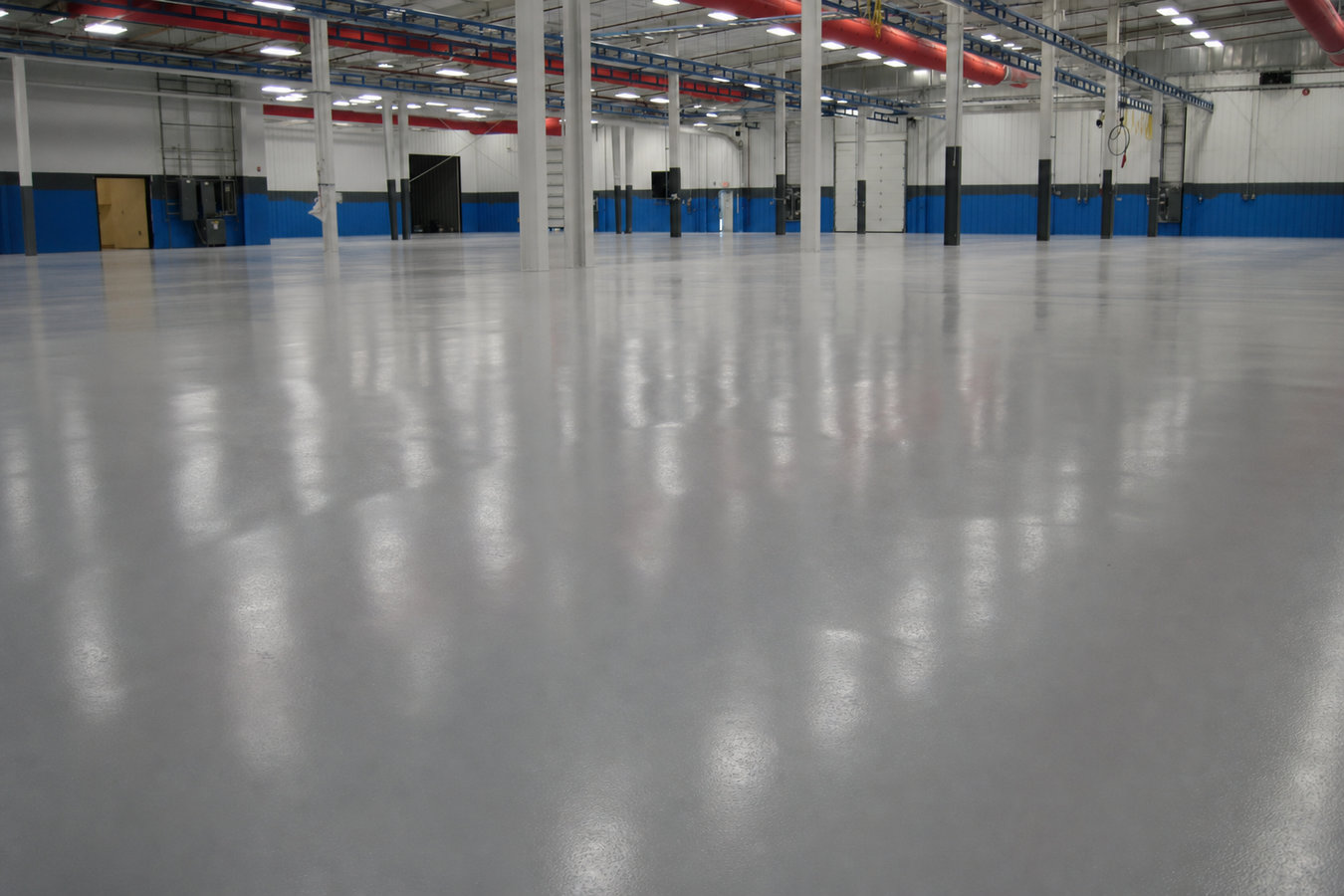
Your business floor takes more punishment than any residential garage. We install epoxy coating systems that handle forklifts, cleaning chemicals, and daily traffic while keeping your operations downtime to a minimum.
Commercial and industrial epoxy flooring in Miami uses thicker, multi-coat systems applied to properly prepared concrete, with most projects taking two to five days and the space ready for heavy equipment and normal operations within 72 hours of the final coat.
The difference from a residential job is scale, system thickness, and the demands the floor will face. A warehouse floor with forklift traffic, a restaurant kitchen with daily cleaning chemicals, and an auto shop floor with oil and hydraulic fluid all need different coating systems - and all of them need concrete that has been properly ground, tested for moisture, and primed before a single drop of coating goes down. Miami's high water table makes moisture testing non-negotiable in any commercial space where a failing floor means stopping operations. If you need a solution for a residential garage instead, our garage floor coatings page covers that. For heavy-duty applications in spaces that also need maximum chemical resistance, consider urethane cement flooring as an alternative.
If you notice fine gray powder on the floor after sweeping, or if liquid spills are soaking in rather than wiping up, your concrete has reached the point where a protective coating will make a real difference. Bare concrete is porous, and once it starts absorbing contaminants, cleaning becomes a losing battle that costs real labor time every day.
Small surface cracks and chips in a commercial floor collect dirt, harbor bacteria, and become trip hazards. In Miami, temperature swings between air-conditioned interiors and hot loading areas cause concrete to expand and contract - meaning minor damage tends to spread faster than in cooler climates. Catching this early is far less expensive than waiting until the damage goes deep.
If your current epoxy or paint coating is lifting at the edges, bubbling in spots, or turning yellow, that coating has failed - most likely because of moisture issues or poor prep on the original installation. This is common in Miami, where humidity makes moisture-related coating failures more frequent than in drier parts of the country. A fresh installation done correctly addresses the root cause.
Miami's rainy season runs June through October, and businesses with loading docks or high foot traffic near entrances often see accelerated floor wear in those zones. Water, grit, and debris tracked in from outside act like sandpaper on unprotected concrete. If you notice the floor looking rougher near entry points after a wet summer, the surface needs protection before the damage goes deeper.
Every commercial epoxy installation starts with the same foundation: moisture testing, mechanical surface preparation, and a coating system chosen for the specific demands of your space. The coating itself is applied in multiple layers - a primer or moisture-mitigating base coat, a build coat, and a protective topcoat. For spaces with heavy forklift traffic or chemical exposure, we can specify thicker film builds and harder topcoats that hold up under those conditions. For food service and medical environments in Miami, we add anti-slip texture and use formulations that withstand the aggressive cleaning chemicals those settings require.
Businesses moving into older Miami warehouse space often deal with failing or missing coatings that need to be stripped before anything new goes down. We handle the complete process - stripping, concrete repair, moisture mitigation, and fresh installation. For spaces in Miami-Dade's growing logistics corridor around Doral and Medley where floors see constant forklift and pallet jack traffic, we also recommend considering garage floor coatings for attached vehicle bays, and urethane cement flooring for areas that require the highest level of chemical and thermal resistance.
A multi-coat epoxy system suited for retail spaces, offices, and light commercial use where the floor needs to look clean and last years with minimal maintenance.
Thicker film builds and harder topcoats for warehouses, manufacturing floors, and auto shops where forklifts, heavy equipment, and chemical spills are everyday realities.
Anti-slip texture and formulations that withstand the harsh cleaning chemicals used in restaurant kitchens - suited for Miami food service environments where health inspectors expect sealed, cleanable floors.
For spaces with a peeling or bubbling existing coating, we strip the old material, repair the concrete, test for moisture, and install a new system that addresses the root cause rather than covering it up.
Miami-Dade County has some of the strictest building codes in the country, put in place after Hurricane Andrew in 1992 and strengthened since. For commercial and industrial floor coating projects, this can affect ventilation requirements, chemical storage rules, and what permits are needed for specific types of work. A contractor who has worked extensively in Miami-Dade already knows what is required and can navigate the process without delays. Beyond the code environment, Miami's commercial real estate boom - particularly in warehouse and logistics space in Doral, Medley, and Hialeah - means contractors in this area are regularly handling remediation work on older concrete that has never been coated or was coated years ago with products that have since failed. Businesses in Doral and Hialeah operate out of this kind of space regularly, and we know the conditions those buildings present.
Coastal businesses near Brickell, Wynwood, or the Port of Miami also deal with salt-laden air that accelerates wear on unprotected concrete. An epoxy coating acts as a barrier that slows that process and reduces how often a floor needs repair. For food service and healthcare businesses in Miami, a sealed floor is not optional - it is what health and safety inspectors expect to see. We use coating systems designed for OSHA walking-working surface standards and can add anti-slip texture anywhere wet floors are a daily concern.
We respond within one business day and schedule a visit to see your space in person. We look at the size of the area, the condition of the concrete, whether there is an existing coating, and any areas of damage or moisture concern. You get a written estimate that spells out exactly what work will be done and what it will cost.
We work with you to find a time that minimizes disruption - many Miami business owners prefer a Friday start so the floor cures over the weekend. The entire floor area needs to be completely cleared: no equipment, shelving, vehicles, or stored goods on the concrete.
The crew grinds or shot-blasts the concrete to open it up and give the epoxy something to bond to. Cracks and damaged areas are filled at this stage. If moisture testing shows elevated levels - which is common in Miami given the high water table - a moisture-blocking primer is applied before anything else goes down. This prep work takes most of the first day.
Epoxy is mixed and applied in layers. Each layer cures before the next goes on. Light foot traffic is possible within 24 hours; full operations - including heavy equipment - typically resume after 72 hours. We walk you through the finished floor and leave written care instructions before we go.
We come to your location, assess the floor in person, and give you a quote that covers everything - prep steps, number of coats, products used, and timeline. No surprises. We respond within one business day.
(786) 435-9567Moisture is the single most common reason epoxy floors fail in South Florida, and skipping the moisture test is the most common shortcut taken by contractors moving fast through a job. We test every concrete slab before applying anything - if moisture is present, we address it with a mitigation primer before the coating goes down. This is the step that determines whether your floor lasts 10 years or 10 months.
Miami-Dade County maintains its own local amendments to the Florida Building Code - some of the strictest in the country. We know which commercial floor coating projects require permits, what ventilation rules apply during application, and how to keep your project compliant from start to finish. You can verify contractor licensing directly through the Florida DBPR.
We understand that closing a business for a week is not possible. We schedule around your hours, work through weekends when needed, and give you a specific timeline before we start - not a vague estimate that keeps shifting. Most Miami commercial clients are back to full operations within 72 hours of the final coat being applied.
A large share of Miami commercial floor calls involve existing coatings that are peeling or bubbling. We handle the complete remediation - stripping the failed material, repairing the concrete underneath, testing for moisture, and installing a new system that addresses the root cause. We do not paint over a failing floor and send you an invoice.
Every commercial floor project is different, but the standard is always the same: proper surface prep, moisture testing, the right coating system for the specific use case, and a schedule that gets your business back up and running as fast as possible.
Residential-focused epoxy and polyaspartic coating systems for garages, workshops, and covered patios - built for Miami's humidity and salt air conditions.
Learn MoreA step above standard epoxy in chemical and thermal resistance - the right choice for commercial kitchens, food processing areas, and any space with extreme temperature swings.
Learn MoreWe work around your business hours and give you a written quote before any work begins. Reach out now and we will respond within one business day.