Loading...
Serving Miami, FL and surrounding areas. (786) 435-9567
Miami's heat, rain, and salt air eat through unsealed concrete fast. We seal driveways, patios, and pool decks with products built for South Florida conditions.
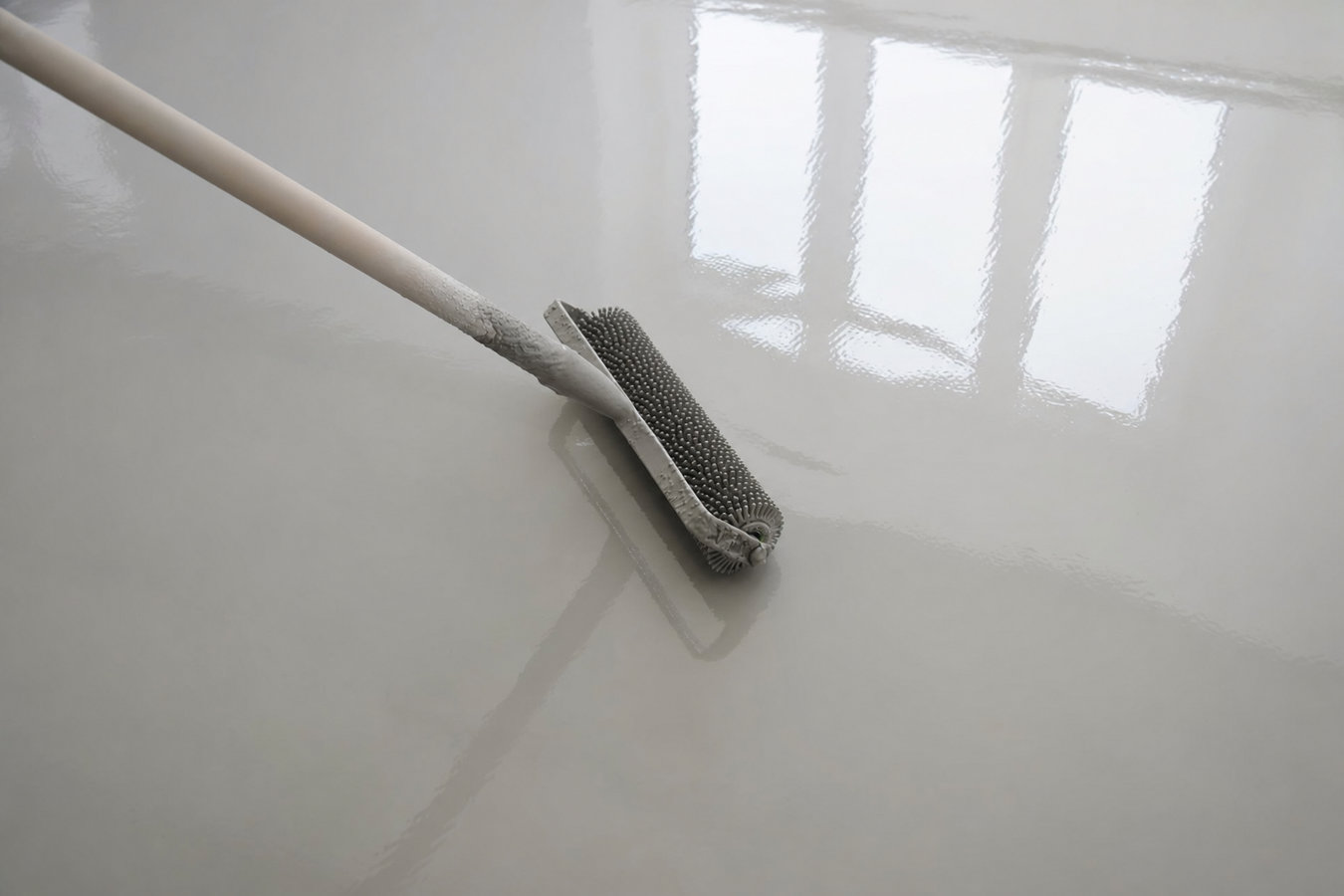
Concrete sealing in Miami applies a protective barrier to your driveway, patio, or pool deck so that water, oil, and other liquids stay on the surface instead of soaking in and causing damage, and most residential jobs are complete in one to two days.
In most parts of the country, concrete sealing is optional upkeep. In Miami, it is closer to basic maintenance. The city gets over 60 inches of rain a year, humidity stays above 70 percent for most of the year, and UV intensity is high every single month. That combination breaks down unsealed concrete faster than almost anywhere else in the United States. You end up with mold and algae growth on your patio, a crumbling driveway surface, and - if your home is near the water - that chalky, powdery breakdown that salt air causes on unprotected concrete.
Sealing pairs naturally with our stained concrete flooring and concrete resurfacing and overlays services for homeowners who want a complete surface treatment, from prep through protection.
Pour a small cup of water on your driveway or patio and watch it. If the water beads and sits on the surface, your sealer is still working. If it soaks in within a minute or two and darkens the concrete, the protective coating has worn away. This is the clearest and fastest test you can do yourself.
Green patches, black streaks, or a slimy film on your patio, pool deck, or driveway are mold, algae, or mildew - and they signal that your concrete is no longer protected. In Miami's climate, this growth can appear within a single rainy season on concrete that has lost its seal. These patches also make surfaces slippery and can become a safety hazard around pools.
Run your hand across your concrete. If it comes away with a white or gray powder, the surface layer is breaking down. In coastal Miami neighborhoods, this is often accelerated by salt air from Biscayne Bay or the Atlantic. It means the concrete is no longer protected and is starting to deteriorate.
Even if your concrete looks fine, a sealer that is more than two years old in Miami's climate has likely worn thin - especially on surfaces that get direct sun. UV exposure in South Florida degrades surface coatings faster than in most other parts of the country. If you cannot remember the last time the surface was sealed, it is worth having a contractor take a look.
Every sealing job starts with thorough surface prep - pressure washing, mold and algae treatment, crack filling, and complete drying - because skipping or rushing prep is the single biggest cause of sealer failure. We also look at stained concrete surfaces differently than plain gray slabs: decorative finishes need UV-stable products that protect color without dulling the finish or creating a slip hazard.
For homeowners who need more than just sealing - surfaces with significant cracks, uneven spots, or old failing coatings - we connect the sealing work with our concrete resurfacing and overlays service so the repair and protection happen in the right sequence. Product selection matters in Miami: we choose sealers specifically rated for high UV environments and, for homes near the coast, formulations that resist salt air degradation.
Best for driveways and utilitarian surfaces where you want protection without changing how the concrete looks.
Right for patios, pool decks, and decorative concrete where a satin or gloss finish is part of the aesthetic.
Designed for stamped, colored, or textured concrete that needs color protection under Miami's year-round sun.
For wet-area surfaces around pools where grip matters as much as protection - keeps the deck safe when it is soaking wet.
Miami sits at roughly 25 degrees north latitude, which means intense UV exposure every month of the year - not just in summer. That relentless sun breaks down surface sealers faster than in most U.S. cities, pushing the typical resealing interval down to one to two years rather than three. On top of that, Miami's rainy season from June through October brings daily heavy showers, and unsealed concrete absorbs that moisture constantly. According to the University of Florida IFAS Extension, that moisture feeds the mold and mildew growth that Miami homeowners see on patios and pool decks every wet season.
Salt air is a separate factor for homeowners in coastal neighborhoods like Miami Beach, FL and Coral Gables, FL. Salt accelerates surface deterioration and causes the chalky breakdown on the top layer of concrete that is so common in homes within a few miles of the water. We use sealers specifically formulated to resist salt exposure in these areas - not all products hold up the same way near the coast.
We reply within one business day. We will ask what type of surface you have, roughly how large it is, and whether it is plain or decorative concrete - so we can give you a realistic estimate before we visit.
We look at the concrete up close, checking for cracks, mold or algae growth, old sealer that is peeling, and whether the surface type calls for a penetrating or surface-coating product. We tell you upfront what prep is needed and what that adds to the cost.
The surface is pressure washed, treated for mold and algae, and allowed to dry completely - in Miami's humidity this can take longer than you expect. Existing cracks are filled before sealer goes on. We do not seal over open cracks.
Sealer goes on in two thin coats with drying time between them. Plan on at least 24 hours before foot traffic and 48 to 72 hours before parking a vehicle. We give you exact timelines before we leave and schedule around the weather forecast.
Free estimates, no obligation, and we reply within one business day.
(786) 435-9567A sealer that works well in Atlanta or Charlotte may not hold up in Miami. We select products rated for high UV environments and, for coastal homes, formulations that resist salt air degradation. The Portland Cement Association notes that product selection for local climate conditions is one of the most important decisions in any sealing job.
Pressure washing over mold and algae just traps the problem underneath - it will come back faster and the sealer will not last. We treat biological growth before sealing, using the remediation methods recommended by the University of Florida IFAS Extension for Florida's climate conditions.
Miami homeowners use their pools year-round, and a slippery sealed pool deck is a real hazard. We include anti-slip texture additives in our pool deck sealer applications as a standard practice - not as an upsell - so the surface is protected and safe when wet.
Applying sealer when rain is in the forecast is one of the most common reasons sealing jobs fail. We monitor the weather before and during every job, and we will not start a project if conditions are not right. If rain moves in unexpectedly, we reschedule rather than rush.
Concrete sealing is one of the least expensive ways to protect what is often a significant investment in your home. Done right, it keeps your surfaces looking clean and holding up through Miami's weather year after year.
When cracks and surface damage need to be repaired before sealing, resurfacing restores the slab first.
Learn MoreDecorative stained surfaces benefit from a UV-stable sealer that locks in color under Miami's year-round sun.
Learn MoreBook your free estimate now and we will assess your surface and give you an honest price with no pressure.